By the time Geoff Ogilvy and Brandt Snedeker finished explaining their Presidents Cup selections to start the week, the central question of the matches at Medinah had become clear.
It is not whether the United States has more top-tier talent. That question has been answered often enough throughout the history of this event.
The question is whether the International Team can convert its growing sense of identity into the handful of moments that have repeatedly eluded it — those final putts, closing holes, Saturday reset, and matchups that turn a close week into another familiar American celebration.
Ogilvy, the International captain, spoke with the urgency of someone who understands both the opportunity and the burden, given that the Internationals have not won the Presidents Cup since 1998. Yet he pushed back against the idea that the recent lopsided final scores tell the whole story.
Montreal (2024), Ogilvy said, the International side actually won more holes. In Charlotte (2022), it hit more fairways and greens and outperformed the United States in ball-striking metrics. The difference was narrower and crueler: too many lost finishing holes in Montreal, too much American putting in Charlotte, and too few of the intangible moments that decide team golf.
“That’s a really hard one to put your finger on,” Ogilvy said, a line that might be the most honest ever spoken at a captain’s press conference.
The Presidents Cup is built to frustrate rational analysis. Data can identify form. Statistics can highlight strengths and weaknesses. Models can recommend pairings. But none of it can fully capture what happens when a player stands over a six-foot putt with teammates, captains, crowds, and expectations all on a small patch of green.
That tension — between information and instinct — ran through both captains’ appearances.
Ogilvy defended the selection of Christiaan Bezuidenhout, a choice that might seem surprising given his official world ranking or FedExCup position. But he described the South African as an analytical outlier: a player whose strokes-gained numbers and skill place him among the International Team’s best options, despite a season with few top finishes that generate those coveted points.
Then Ogilvy made the case that data by itself cannot make. Bezuidenhout is a strong iron player, an excellent putter, an experienced Presidents Cup performer and, crucially, “a fantastic team guy in the team room.”
It is easy for those who have never been in a team room to dismiss chemistry, especially since golf is usually an individual sport. Yet Ogilvy’s entire captaincy appears built on the premise that the International Team’s greatest weakness — its geographic, cultural and linguistic diversity — can become its greatest strength.
He credited Ernie Els’ introduction of an International shield in 2019 as a pivotal moment. The shield gave players from Australia, South Korea, Japan, Canada, South Africa, and elsewhere a shared identity beyond their own national flags. According to Ogilvy, the group doesn’t just assemble every two years; it’s an ongoing program, a larger family narrowed to 12 players for one week.
Think of the European Ryder Cup model, long admired for combining individual excellence with a deep institutional memory of team competition. The International Team cannot replicate that regional identity. But it can create its own continuity, and Ogilvy believes it has.
Now it needs to “crack the code on the golf course.”
At the same time, Snedeker sounded like a captain assigned to manage an embarrassment of riches. He said his American selection process involved up to 17 viable candidates — enough depth that leaving players out was not so much a judgment of ability as an unavoidable consequence of being limited to 12.
His most revealing choice was Jackson Koivun, the young player Snedeker described as having stared down Scottie Scheffler on the back nine at the 3M and “not blinked.” Snedeker had said previously that he would not choose a player simply because he was young. On Monday, he made clear that this was not the case. It was a competitive pick.
He’s watched 21-year-old Koivun play with him, reached out to coaches and others, and come away convinced that the rookie belongs.
Both captains suggest that team competition forces them to choose people, not just resumes.
Snedeker repeatedly returned to one phrase: “trust your gut.”
He said he received this advice from past captains, including Jack Nicklaus, Paul Azinger and Davis Love III. The numbers can narrow the process, but they cannot inform a leader whether a rookie will be overwhelmed at the first tee, whether a superstar needs a particular kind of playing partner, or whether two players will genuinely want to endure the pressure of alternate shot together.
The American task is more complicated than simply assembling its best players. Snedeker must find a partner for Scheffler, whose individual dominance has not translated as well to team-play success. He must decide whether to pair veterans with rookies. He has to turn strong friendships into functional pairings and avoid assuming that greatness automatically creates chemistry.
He also gave Ogilvy’s roster more respect than the usual pre-tournament chatter allows. Snedeker specifically cited possible International combinations, including Nick Taylor and Corey Conners, Ryo Hisatsune and Hideki Matsuyama, and Bezuidenhout’s value as a player and teammate.
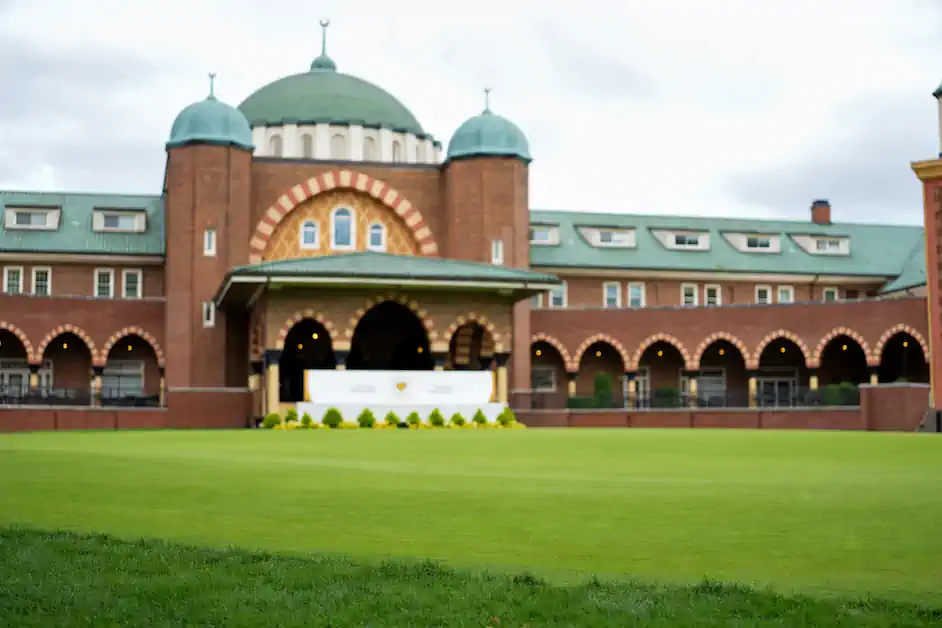
Medinah No. 3 adds another layer. Ogilvy knows it as a captain and as someone intimately involved in its redesign. Yet even he conceded that there is no relevant ShotLink history for the new course, leaving both teams to make their best guesses.
That may be exactly what the International Team needs.
The Americans arrive with greater depth, more stars, and the weight of a winning history. The Internationals seek to end a long drought, with a sharper collective identity and a captain who insists the margins have been much tighter than recent outcomes.
At Medinah, the Presidents Cup may hinge on whether Ogilvy’s team can make those margins matter — and whether Snedeker’s instincts can turn a wealth of talent into the right kind of team.