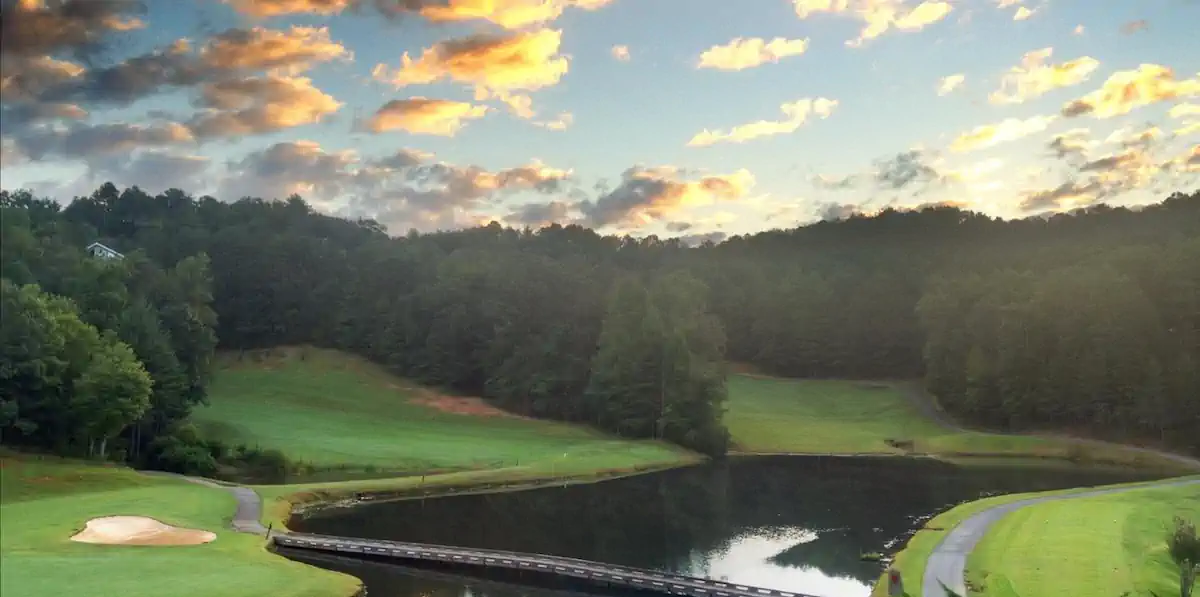
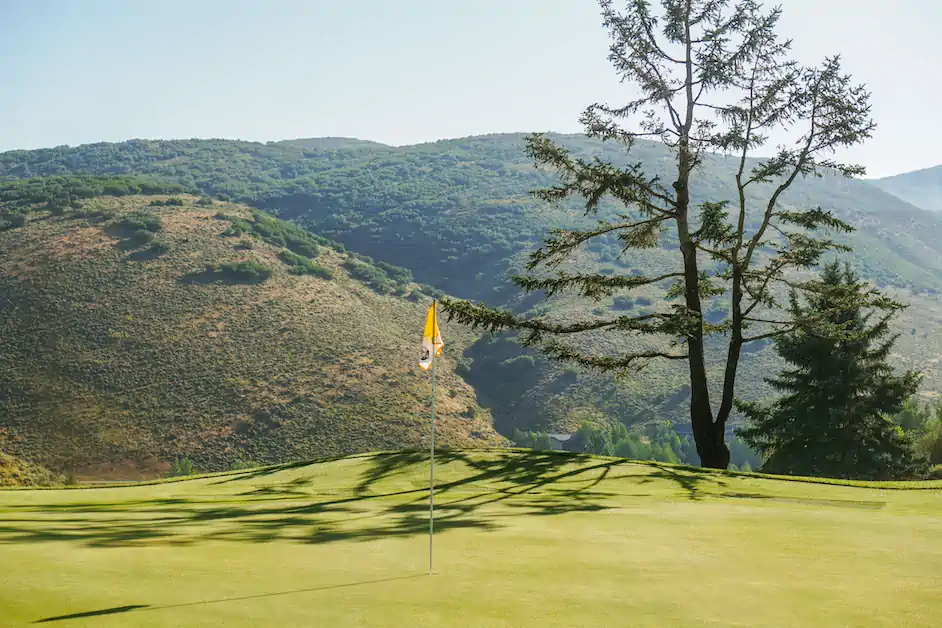
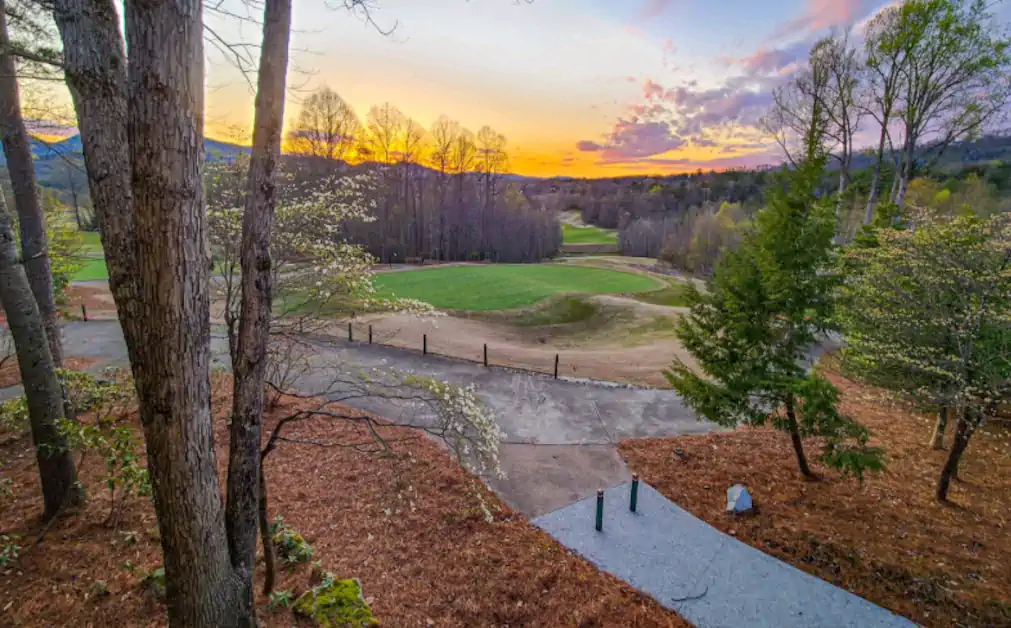
Mountain golf offers a different kind of experience. Fairways rise and fall on Mother Nature’s terms, shots are influenced by elevation, and cooler temperatures make even midsummer rounds a pleasure.
Only a small fraction of American golf courses are located in the mountains, and fewer still enjoy the spectacular setting of the Blue Ridge Mountains in Western North Carolina, where dramatic vistas and rolling terrain create an unforgettable golf experience.
The Elevation Advantage
Ask any golfer who’s escaped to the mountains during the summer, and they’ll tell you the difference is immediate. At elevation, temperatures often run 10 degrees cooler than courses at lower elevations, turning July and August into some of the year’s best golfing months.
Most importantly, the terrain transforms the experience. Fairways tumble downhill before climbing toward elevated greens, and uneven lies are often the norm.
Few courses embrace that landscape better than Champion Hills.
Widely regarded as Tom Fazio’s “Mountain Masterpiece,” Champion Hills follows the mountain’s natural contours rather than fighting them. The result is a layout that feels as though it belongs to the landscape instead of simply occupying it.
Learning to Play the Mountains
“The topography makes the difference in the mountains,” Champion Hills Head Golf Professional Nick Auten said. “Making the correct adjustments with club selection and around the greens is really important. Playing uphill, downhill and from uneven lies changes everything.”
Golfers won’t notice a dramatic increase in how far they hit the ball at Champion Hills’ 2,500-foot elevation, but they will quickly learn how much slopes influence every shot.
Auten’s advice is straightforward.
“My tip when you’re playing uneven lies is to make sure your shoulders stay parallel to the ground,” he said. “Whether the ball is above your feet or below your feet, your setup has to match the slope.”
Mountain golf also rewards precision.
“The more accurate player is probably going to have a better score than someone who’s simply a longer hitter,” Auten said.
A Course Designed for the Mountains
Beautiful scenery alone doesn’t guarantee an outstanding course.
“What separates the best mountain courses is the architecture,” Auten said. “The terrain can either help you or limit you. It’s about how the architect sees the land and uses it.”
Few architects have done that better than Fazio.
Champion Hills consistently ranks among America’s premier private clubs because every hole embraces the mountain landscape without feeling forced.
“There are very tough tests and then opportunities to make birdies,” Auten said. “It’s a great mixture, and a big part of what makes playing at Champion Hills so fun.”
Auten cites the closing stretch, holes 15 through 18, as his favorite, while the par-3 ninth offers the course’s most breathtaking view.
“It definitely has the best view on the golf course,” he said of No. 9, which plays from an elevated tee box to a green that resides 125 feet below. “But honestly, every hole is unique.”
More Than a Golf Course
Champion Hills offers more than exceptional golf. Located just south of Hendersonville, the club provides a year-round lifestyle centered on golf, tennis, pickleball, fitness, dining, and an active social calendar.
Champion Hills captures everything that makes mountain golf special: dramatic elevation changes, unforgettable scenery, and architecture that accentuates the virtues of the land. For golfers looking to escape the summer heat while enjoying one of the Southeast’s finest private clubs, there’s no better place to enjoy mountain golf than Champion Hills.
For more information, visit ChampionHills.com