The PGA Tour season is underway with this week’s Sony Open in Hawaii.
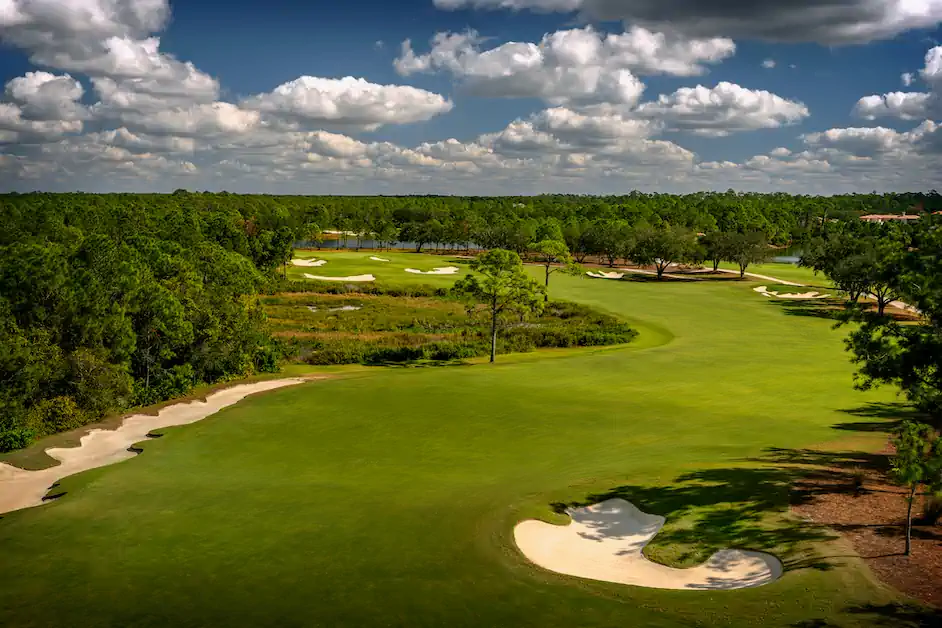
As I teed it up on Bay Hill, crews were all over the course building out chalets, grandstands and other infrastructure in anticipation of the Arnold Palmer Invitational presented by Mastercard the first week of March.
You could call it business as usual, sort of.
The recent return of Brooks Koepka is a win for fans of the highly-popular five-time major winner, and the PGA Tour’s reconciliation with a prodigal son is a seminal moment.
The severe wounds administered by LIV Golf, and others somewhat self-inflicted by the PGA Tour’s initial response a couple years ago, did nothing to grow the game. Instead, it fractured a national pastime that has long been seen as one of the most stable in sports.
It’s been widely speculated that Koepka raked in about $165 million dollars in signing bonuses and prize money from the Saudi-funded golf league. As part of his settlement with the Tour, he must make a $5 million donation to a mutually agreed upon charity, forfeit his eligibility to earn from the Players Equity Fund for the next five years, which could be as much as $85 million. Additionally, he will earn no FedEx Cup bonus money this season and can only qualify for “signature” events by performance, no exemptions whatsoever.
Koepka took his medicine gracefully, but in my estimation, the PGA Tour missed a golden opportunity by not adding one additional component.
What if Koepka and others wanting to return had to play in a defined number of non-signature events for the next five or ten years? What would it have meant to the Cognizant Classic, the Valspar Championship or the John Deere Classic to have him in the field at least every other year for the next decade, while striving to qualify for higher dollar events, including the FedEx playoffs?
No one knows what the next five years will look like, and what schedule changes might be on the horizon, but some focus on the here and now is also warranted.
Star players sell tickets and drive tune-in, and regular-season events would welcome all the help they can get. It makes one wonder if the Future Competition Committee, comprised of Tiger Woods and some PGA Tour members, along with a trio of business advisors, should invite a couple of tournament directors to the table on a rotating basis. Perspective from all key stakeholders is always a good thing.
As he makes his return in the Farmers Insurance Open at Torrey Pines later this month, 35-year-old Koepka fully expects to be the recipient of both cheers and jeers.
“There’s probably a mixed bag of, ‘We’re happy you’re back, welcome home’ to ‘You shouldn’t be here.’ I understand everybody’s point of view,” Koepka said. “I was going to be sitting out possibly a year, and I’m extremely thankful the tour gave me this opportunity.”
Future golfers choosing to bolt from LIV Golf will likely not be as fortunate.
“This is a one-time, defined window and is not a precedent for future situations,” PGA TOUR CEO Brian Rolapp said. “Once the door closes, there is no promise that this path will be available again.”
The PGA Tour’s recently announced “Returning Member Program” provided a pathway for specific players — major and Players Championship winners between 2022 and 2025 — to return. That designation includes only three other players: Bryson DeChambeau, Jon Rahm and Cam Smith.
For now, that trio appears to be staying put and not following Koepka’s trail.
“I’m contracted through 2026,” DeChambeau said at a LIV news conference last week, “so I’m excited about this year.”
“I’m not going anywhere,” added Rahm. “Focused on the league and my (LIV) team this year.”
Smith, who won the 2022 Players Championship before leaving, has no plans to return to the PGA Tour. “I made a decision to come here,” Smith said, “and I stand by it.”