Editor’s Note: Less than 24 hours after we published this editorial by George McNeilly, Callaway Golf severed ties with Good Good and the PGA TOUR accepted its resignation as title sponsor of the November tournament in Austin, Texas. The tournament will go on, with an update on sponsorship plans at a later date, according to a statement by the TOUR.
If you don’t live for golf, let me bring you up to speed.
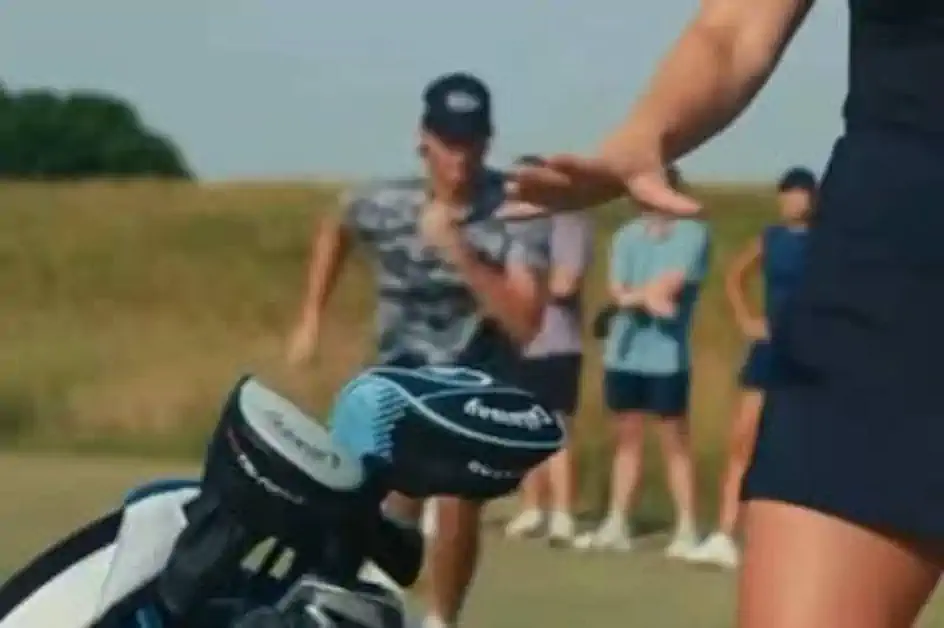
Good Good Golf influencers produced and published a video for Callaway Golf. In it, a man puts his hands on a woman. She falls. He stands over her. Now everyone has to decide what it means.
That image captures two crises a dozen years apart, and the gap between them is the story. The first showed Baltimore Ravens running back Ray Rice punching his fiancée, Janay Palmer, unconscious in an Atlantic City casino elevator in February 2014. The second showed Good Good co-founder Garrett Clark charging across a golf course, shoving colleague Alexis Miestowski to the ground, looming over her, and growling, “Do not touch my new driver.” It was an advertisement for a co-branded Callaway driver introduced last week, captioned, “You have been warned.”
These are not morally equivalent. Rice was charged with a third-degree felony against a real victim. Good Good staged a commercial it thought would be funny, and Callaway thought would sell golf clubs. Anyone who rejects that distinction loses the argument before it begins. In each case, the industries that had to respond faced the same test: would leadership act on its own stated values or wait for public pressure to decide for it?
The NFL failed that test in 2014, and the failure was so epic that it reset the cultural baseline for everyone afterward. The league did not cause Rice’s violence, but its reputation was called into question by how it investigated, judged, and communicated after the fact — including a two-game suspension that came only after the full elevator video surfaced and an independent review concluded that the league should have known more than it disclosed. That is the only reason Rice belongs in this column — not to equate the two, but because the league’s handling of him is a textbook example of what not to do.
To his credit, Brian Rolapp answers questions very directly. When I asked the PGA TOUR CEO and soon-to-be next commissioner whether Good Good had taken enough accountability, he said no, not initially — calling their response “concerning” and “a bit defensive and late” — and added that the situation remains fluid and he is watching it closely.
I take him at his word.
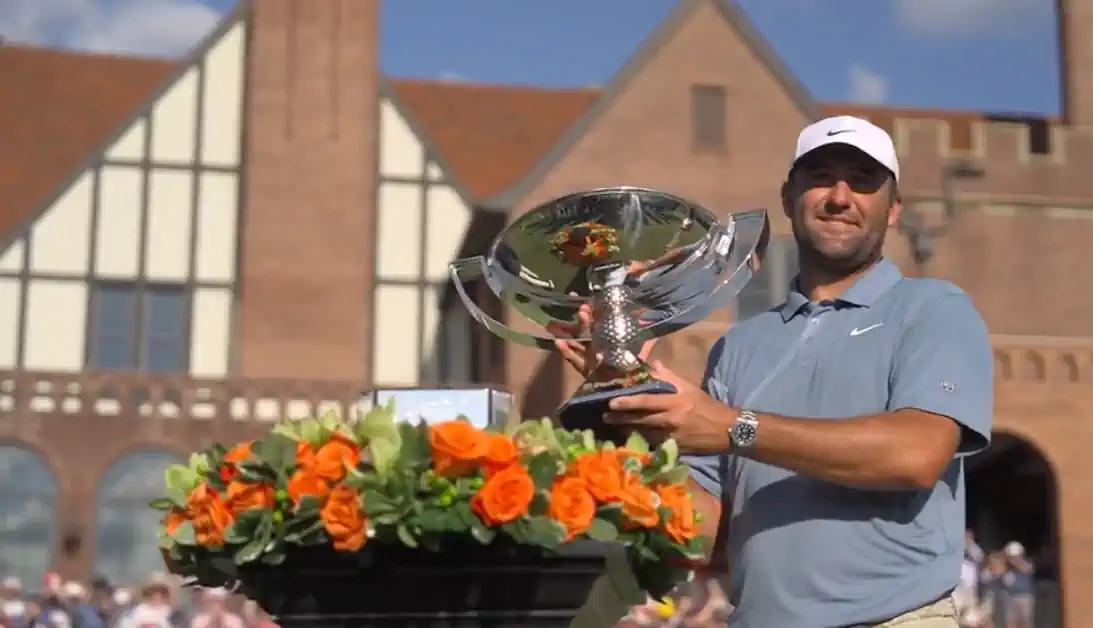
Good Good launched in 2020 as a bunch of fun-loving kids appealing to young golfers and has grown into a genuine sports business: apparel lines that move, and come November, a PGA TOUR title sponsorship in Austin, TX — the Good Good Championship, the first TOUR event ever to carry an influencer-first brand’s name.
Rolapp has been on the job a little more than a year — a 22-year NFL veteran, as it happens, brought in to modernize the TOUR — and is ushering in a new era. With so much positive traction already, he must be asking the question every leader eventually faces: is the juice worth the squeeze?
In the days since, Golf Galaxy has pulled its branding and support for the latest iteration of Big Break, and Golf Channel has postponed this week’s scheduled debut. Now word comes that other retailers, including the PGA TOUR Superstore, are removing Good Good product from their shelves.
I worked alongside Good Good in the past. They hired Matt Kendrick as CEO, who built a viable business from what started as a YouTube channel — one that raised so many millions that it now sponsors TOUR players like Joel Dahmen and Beau Hossler. Now, Callaway has introduced its Good Good-branded driver, prompting one high-profile player representative to ask me whether the brand tail is wagging the institutional dog as influencers grow their presence in our culture.
Why wouldn’t Callaway use Xander Schauffele, Sam Burns, or Min Woo Lee to peddle the product? The answer is simple: Good Good reaches a young audience that complements Callaway’s marketing strategy, something no PGA TOUR player has since Tiger Woods drew that critical mass. Still, professional players sell golf clubs to golfers, while the hope was that Good Good would sell them to kids who haven’t yet decided they want to play the game.
Many questions remain. Callaway, Good Good, and others have issued statements of regret — Callaway’s CEO Chip Brewer conceded that his company approved the ad before it was published and that “that approval should never have happened.” But statements of regret are not a governance framework. Apologies are a start; standards must prevail.
In the aftermath of this debacle, the standard the PGA TOUR will likely articulate is this: if a partner whose name is on an event produces content that conflicts with Rolapp’s stated commitment to a welcoming, inclusive game, there is a defined path that could end with them being asked to exit the golf course.
The lesson is simple. Even joking about a man putting his hands on a woman is no laughing matter — consumers, sponsors, and retailers see it through a lens permanently reset by the NFL’s failure. That is why the commercial should have been dead on arrival. When I searched for the Good Good product at my favorite online retailer today, it was nowhere to be found.
Should the PGA TOUR say goodbye to Good Good? That’s not for me to say, but it should not be an immediate reaction or a response to a bad week.
Goodbye is often the easiest answer; developing a principled framework is far harder.
The question isn’t whether Good Good is sorry. It’s whether Good Good can still meet a standard any partner would defend in public. The PGA TOUR has the video. Now it needs the playbook.