As pleased as I am to be in Chicago this week for the Presidents Cup at Medinah, I will keep one eye on my iPhone because it is football season.
Fortunately for the galleries, the steadily improving Chicago Bears do not play until Monday night, when they host Philadelphia. That should help locally. Many people will have time to make the trip to the course, and many more will watch on NBC and Golf Channel.
But that does not erase the larger issue.
The NFL owns the fall. NCAA Football is a Saturday ritual. Major League Baseball is moving toward the playoffs. NBA training camps and the effective fan and media engagement that accompany all that competition for attention loom large. Every network, website, and sports fan has more choices than time, especially during the late-September weekend when the Presidents Cup hopes to command an audience.
Golf knows this, even if it does not always like to admit it.
A recent Gallup poll made the hierarchy clear, though it was hardly a revelation. Football remained America’s favorite sport to watch, chosen by 31 percent of respondents. Basketball ranked second at 11 percent, followed by baseball at 10 percent and soccer at 9 percent. Golf registered at 1 percent, part of a group of sports competing for a much smaller share of the national audience.
That number sounds harsh, especially for those of us who spend much of our lives around a game we are passionate about. It means professional golf must work especially hard to capture the attention of the casual sports fan.
Last week, I had an opportunity to ask PGA TOUR CEO Brian Rolapp about that reality. Given his former role as the NFL’s chief media and business officer, and his long experience in the marketplace, he is as qualified as anyone to understand both the challenge and the opportunity.
Rolapp did not dismiss the obvious. No one should be surprised, he said, that football is America’s most popular sport. He also emphasized golf’s growth in participation since the COVID era, along with the TOUR’s improved performance even as traditional linear-television viewing continues to decline.
“I think there’s a bunch of compelling data about the growth of the game of golf,” Rolapp told me. “Both people who play it but also people who engage in it in media or professional golf.”
He is right to see opportunity.
Golf is healthier at the participation level than many people realize. More people are playing, and more are finding their way into the game. Some are playing nine holes after work. Others are spending time at driving ranges, simulators, or golf-themed entertainment venues such as Topgolf and Popstroke, or even playing Footgolf, a hybrid game that uses a soccer ball on courses like Disney’s Oak Trail in Orlando. All of that makes the game more approachable than it may have seemed a generation ago. Many younger players are discovering golf through social media, instructional videos, the First Tee, and a professional tour that increasingly understands it cannot rely on one form of media alone.
All of that is good news.
But participation and attention are not the same thing.
A person can play twice a month and still not watch a PGA TOUR event on a Sunday afternoon. Someone can enjoy hitting golf balls with friends, follow a favorite player on social media and know who won the Masters without feeling compelled to invest four days in a tournament that may not truly become competitive until the final few holes.
That is the challenge for professional golf.
The game does not lack talent. It does not lack great players, fine courses or stories worth telling. What it needs, particularly when it is competing for attention during the most crowded stretch of the sports calendar, is a reason for people to stop what they are doing, watch and care.
The Presidents Cup can provide that reason, but only if it delivers tension.
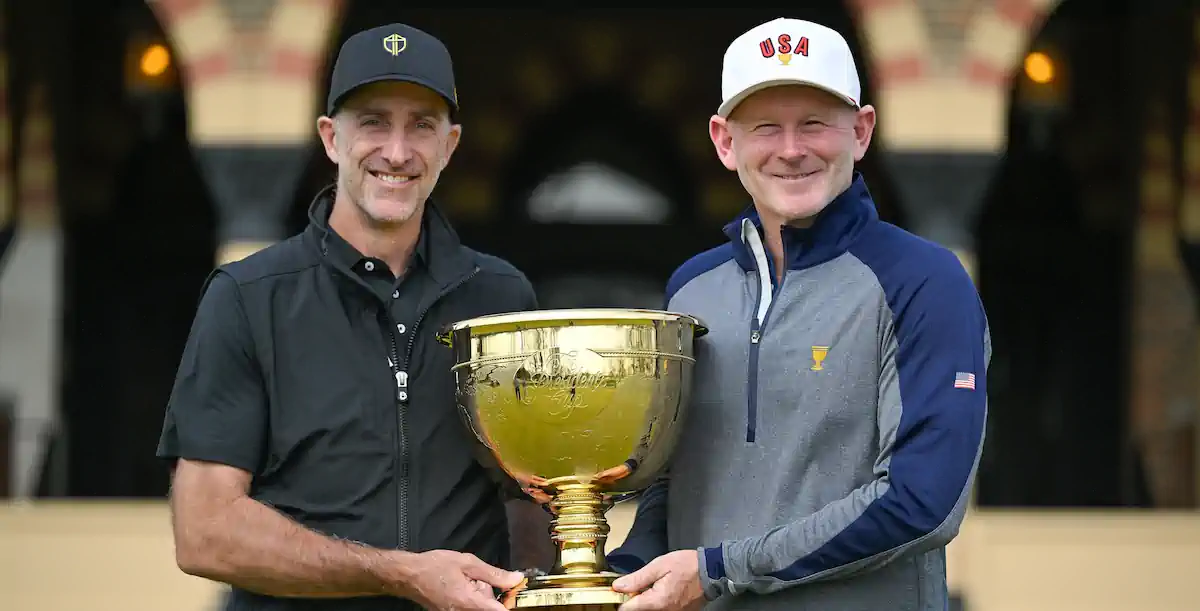
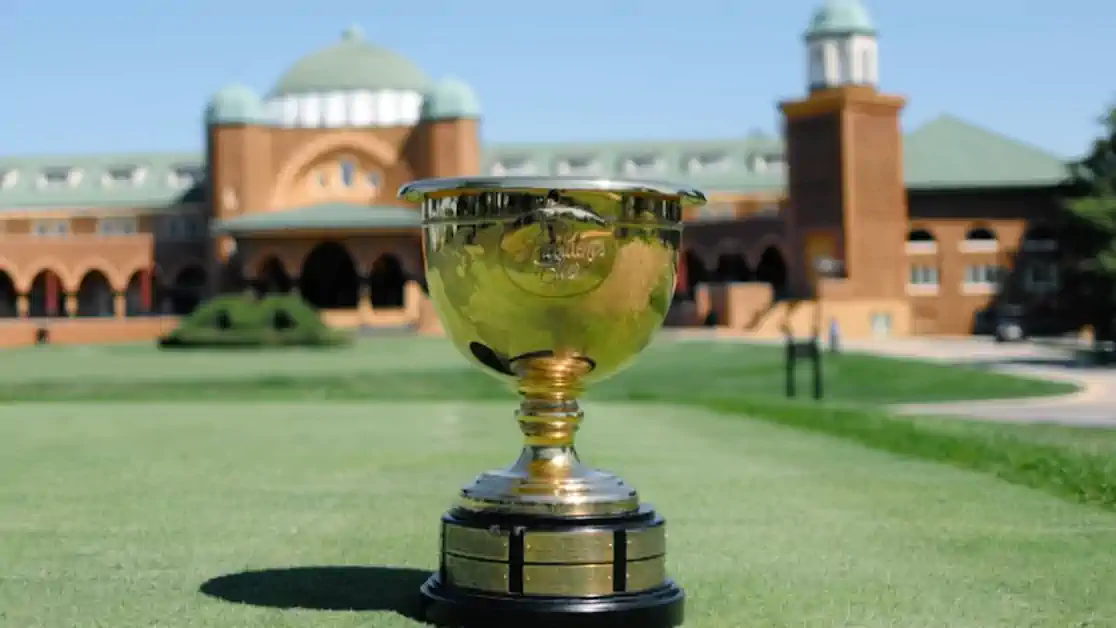
Medinah gives the event a powerful backdrop. The course has hosted the U.S. Open, two PGA Championships, and a Ryder Cup comeback known as the Miracle at Medinah. It is a place with history. It has also changed significantly, particularly over the last six holes, through a renovation by International captain Geoff Ogilvy’s architecture firm.
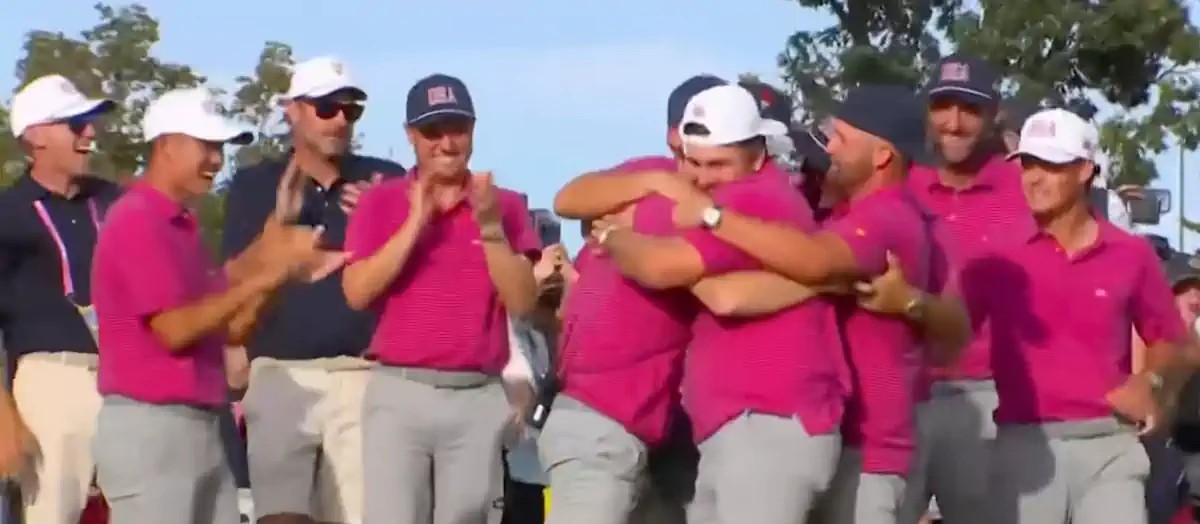
The players give the event some credibility with viewers who may not tune in every week. Scottie Scheffler is the clear headliner for the American side. Xander Schauffele, Collin Morikawa, Justin Thomas and Patrick Cantlay all bring accomplishments and recognizable identities. Hideki Matsuyama and Adam Scott give the International team major-championship stature, while Tom Kim and Min Woo Lee bring the kind of energy that can make team golf feel different from another ordinary week on the PGA TOUR.
Most importantly, match play changes the equation.
Golf is usually an individual sport, a quiet contest of execution, patience and self-assurance. Team golf makes each shot feel more immediate. A birdie does not simply improve a player’s scorecard. It can win a hole, create momentum, lift a teammate or silence a gallery.
For four days, golf can feel a little more like the sports that dominate American television in September.
But the event still needs the possibility of an upset. The United States has won 10 consecutive Presidents Cups. That streak makes the Americans the clear favorite, but it also creates the one thing the competition cannot afford: the sense that the outcome is already settled.
The International team does not simply need to win matches. It needs to make the favorite uncomfortable. It needs to create the kind of Sunday in which a casual viewer, flipping between football highlights on NFL RedZone and baseball scores, sees something worth staying with.
Golf does not have to beat football. Nothing does or likely will.
It simply has to remind people that when the stakes are clear, the players are recognizable, and the outcome is uncertain, few sports make a closing stretch, or a winning moment feel as significant.