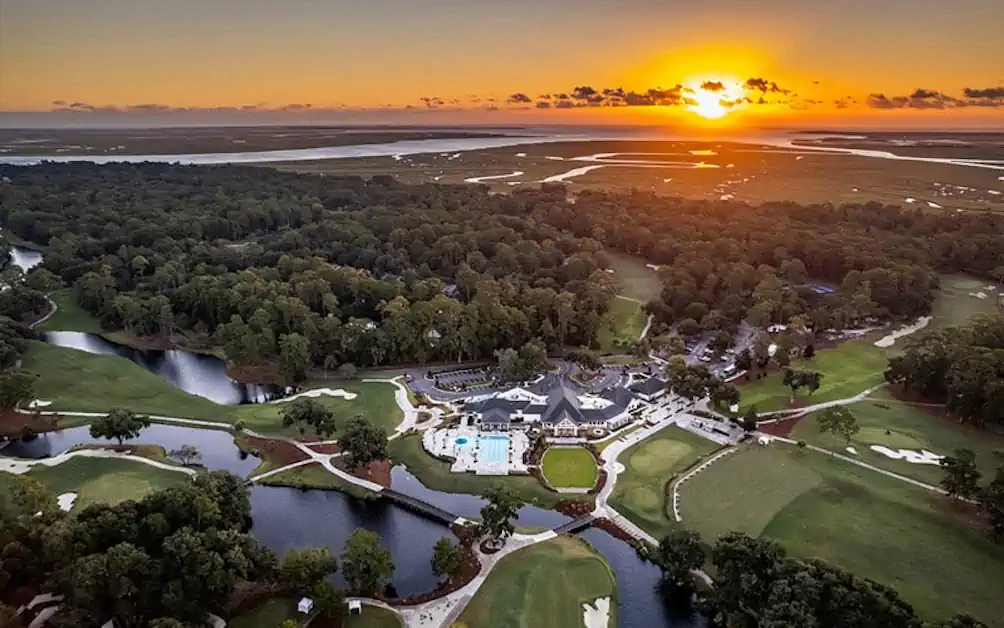
Tucked along the sun-dappled coast of Georgia, the Jekyll Island Club Resort feels less like a hotel and more like a time capsule transported directly from America’s Gilded Age. If you are looking for a getaway that blends coastal charm, dramatic architecture, and stories that sound almost too wild to be real, this island sanctuary belongs at the top of your travel wishlist.
Millionaires and Their Coastal Cottages
When the club opened its doors in 1888, it served as an ultra-exclusive winter retreat for the titan families of the era, including the Rockefellers, Morgans, Vanderbilts, and Pulitzers. At the turn of the twentieth century, Munsey’s Magazine described it as the most exclusive and inaccessible club in the world, and for good reason. The elite members lounging on these grounds represented roughly one-sixth of the entire world’s wealth. Rather than building towering metropolitan mansions, these magnates constructed elaborate, sprawling “cottages” on the island to enjoy what they called a life of elegant leisure.
Architectural Wonders of the Historic District
Walking through the National Historic Landmark District today, you can still marvel at these extraordinary architectural treasures. The centerpiece is the grand, turreted Clubhouse, featuring wraparound verandas, ornate woodwork, and original heart pine floors. Nearby stands Sans Souci, built in 1896 and partially owned by J.P. Morgan, widely recognized by architectural historians as one of the very first condominium complexes in the United States. Another head-turner is Crane Cottage, a striking Italian Renaissance-style mansion complete with sunken gardens and fountains, built for plumbing magnate Richard Teller Crane Jr. Even the spiritual spaces on the grounds carry immense historic weight. Faith Chapel, built in 1904, boasts breathtaking Gothic Revival details and a magnificent stained-glass window installed by Louis Comfort Tiffany himself.
History That Changed the Nation
While the architecture is stunning, the history made within these walls genuinely reshaped the modern world. In November 1910, a secret delegation of financial leaders boarded a private railcar under the cover of night, using only first names to keep their identities completely hidden from the public. They gathered on Jekyll Island to draft a secret plan for banking reform, a clandestine meeting that directly laid the groundwork for the creation of the United States Federal Reserve System. Just a few years later in 1915, the club made history again when AT&T President Theodore Vail participated in the nation’s first transcontinental phone call right from the resort, joining Alexander Graham Bell in New York, Thomas Watson in San Francisco, and President Woodrow Wilson in Washington, D.C.
Championship Golf and Sporting Traditions
Sports and recreation have always been central to the Jekyll Island lifestyle. The island boasts a rich legacy in golf, having served as a testing ground for early steel-shafted clubs and lighter golf balls in the 1920s before expanding its fairways over the decades. Today, golfers at the resort can enjoy three distinct 18-hole courses at the Jekyll Island Golf Club:
Great Dunes Course: Tracing its lineage back to a 1927 design commissioned by J.D. Rockefeller and built by legendary architect Walter Travis, this sweeping layout plays across oceanfront dunes, offering dramatic Atlantic views alongside classic Golden Age mounding and green contours.
Indian Mound Course: Designed by Joe Lee in 1975 and named after ancient aboriginal oyster shell middens found on the island, this layout winds through untouched maritime forests and coastal marshes, delivering tight tee shots and strategic fairway bunkers amidst rich natural scenery.
Pine Lakes Course: Originally constructed in 1968 and later thoughtfully renovated by Clyde Johnston, this ocean-forest track is famous for introducing flexible, family-friendly tee boxes that allow golfers of all ages and abilities to play on a level playing field.
Beyond the Fairways: Coastal Adventures
Beyond the golf courses, the Jekyll Island Club Resort offers far more than just time on the green. Guests can enjoy classic Gilded Age pastimes like croquet on the manicured front lawns, paddle kayaks along the pristine tidal marshes, or rent a bicycle to explore over twenty miles of paved, scenic bike paths that wind beneath towering oak trees draped in Spanish moss.
Wildlife lovers will find that the resort’s connection to nature is equally impressive. The island’s historic former power plant has been transformed into the Georgia Sea Turtle Center, a renowned rehabilitation facility where guests can see sea turtle conservation in action and learn about the delicate coastal ecosystem. A short journey to the northern end of the island brings travelers to Driftwood Beach, an otherworldly stretch of coast littered with bleached, weather-beaten tree trunks that look like giant natural sculptures, offering one of the most memorable photo opportunities in the American South.
Now preserved as a state park and restored to its original splendor, the Jekyll Island Club Resort allows everyday travelers to step into a world once reserved for Gilded Age royalty. Whether you are sipping a cocktail on the veranda, cycling past historic mansions, or wandering under mossy live oaks, a visit here offers a rare combination of relaxed coastal beauty and world-altering history.
Photo Courtesy of Jekyll Island Club Resort