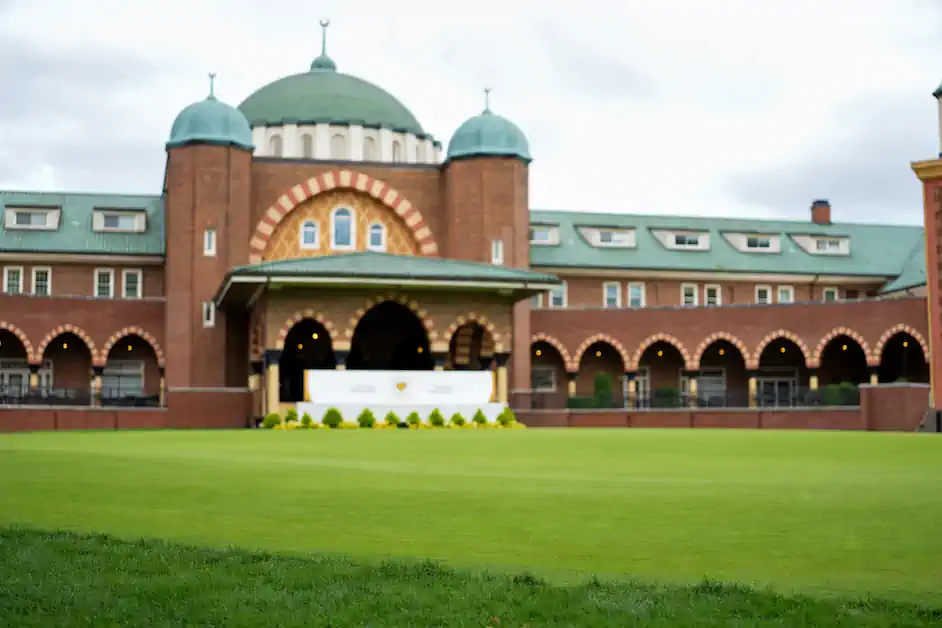
Shinnecock Hills Golf Club does not merely host championships—it reveals what people are made of. As one of the United States Golf Association’s founding clubs, it has a history as deep as its challenge, and the U.S. Open returns here for the sixth time since 1896.
The last visit in 2018 was as difficult as ever. Brooks Koepka outlasted the field to defend his title, finishing at one over par in conditions that demanded both patience and control.
For this writer, another performance lingers, less about survival and more about expression.
Tommy Fleetwood’s final-round 63, with eight birdies and a single bogey, was the kind of round that didn’t just climb the leaderboard; it captivated the leaderboard and the imagination of fans around the world.
Finishing hours ahead of Koepka, he posted a score of two over, waited, and ultimately ended the tournament just one shot back. It was a performance that revealed something essential: not just how Fleetwood plays, but who he truly is.
Since then, his rise has felt less like a surge and more like a steadily unfolding story. Now the 2026 TOUR Championship winner and No. 7 in the Official World Golf Rankings, the Englishman returns to Shinnecock not only as a favored contender but also as one of the most quietly compelling figures I’ve encountered in professional sports.
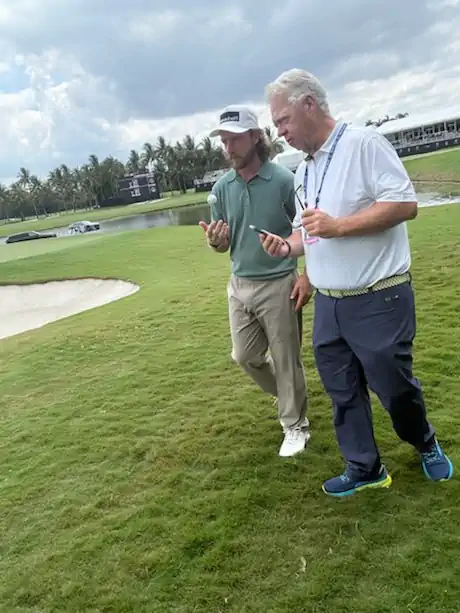 Recently, on a practice range far from the winds of Southampton, that week came back into focus.
“I had a great event last time, made some great memories, and I do love golf in that part of the world,” Fleetwood said. “I’m excited to go back and play Shinnecock, which is a unique challenge. I can’t wait to see how I play at one of the iconic U.S. Open venues. I have a lot of friends who live around there, too.”
There is just an authentic easiness to Fleetwood that stands in contrast to the intensity of his chosen profession. It’s there in conversation, in cadence, and perhaps most noticeably, in how naturally he really connects—with fans, with peers, with media and with the moment itself.
Spend a few minutes watching him outside the ropes, and it becomes clear: the popularity isn’t manufactured by an agency or curated social media clips, and it isn’t fleeting. It’s built interaction by interaction, a smile here, a flowing signature there, an acknowledgment that never feels obligatory, reminiscent of Arnold Palmer himself.
“I’ve been very lucky with the support that I get over here,” Fleetwood said with his brand of humility. “Since I first arrived, I’ve enjoyed the connection I make with people, and I cherish the sort of fan support that I get.”
In a sport that often magnifies frustration and tests one’s temperament, Fleetwood’s steadiness feels deliberate. He doesn’t resist the competitive fire required to win—he simply refuses to let it dictate how he treats others.
“I always try to be myself. I just try to be a good person, and I try to treat people the way I would want to be treated, no matter who you are,” Fleetwood told me. “I love that people come watch me play and support me. Sometimes I feel like I don’t give much back when I’m playing because I get in my bubble and I’m focused and stuff, but I still feel lucky to make a connection while trying to focus on my craft and what I’m doing.”
That balance—between focus and openness, intensity and dignity—is what makes Fleetwood so distinctive. At age 35, he embodies a version of competitiveness that doesn’t rely on tension or confrontation, but on clarity of purpose.
“I would like to think that I have never done anything to anybody I’m playing with or my opponents that would affect them in any way. I just want to play golf and do the best I can to win tournaments,” Fleetwood said. “I enjoy playing and working on my game and then going out there and I totally think you can be very competitive and a great competitor and be a nice person and be yourself.”
At Shinnecock, where the course has a way of stripping players down to their bare essentials, that mindset may prove as valuable as any swing thought. Because while talent can often contend, it’s temperament that always endures—and few in the modern game wear theirs as naturally as Tommy Fleetwood.